Two photographs, side by side. One—black and white—dates from 1942. The second—full color—dates from 2026.
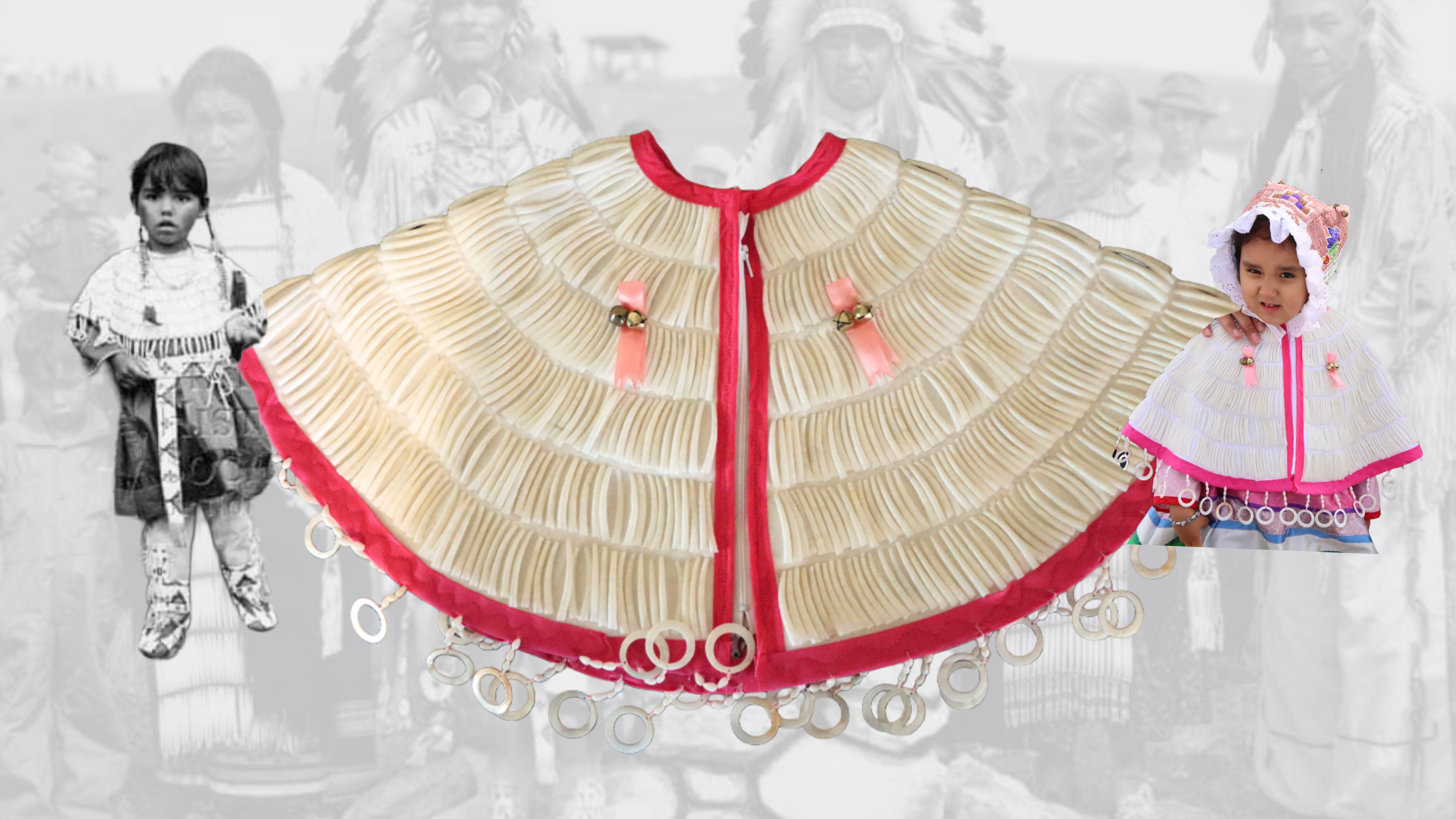
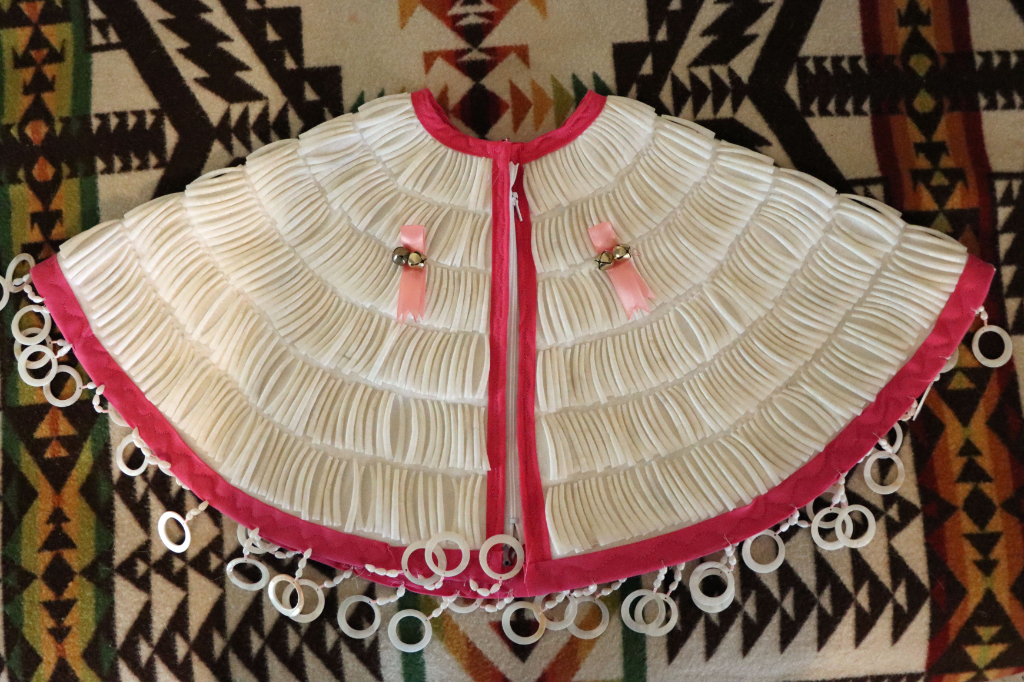
In both, a young girl wears a short cape stitched with rows upon rows of dentalium shells. She stands with her family around a monument at Whitestone Hill (Íŋyaŋsáŋ Pahá), North Dakota.
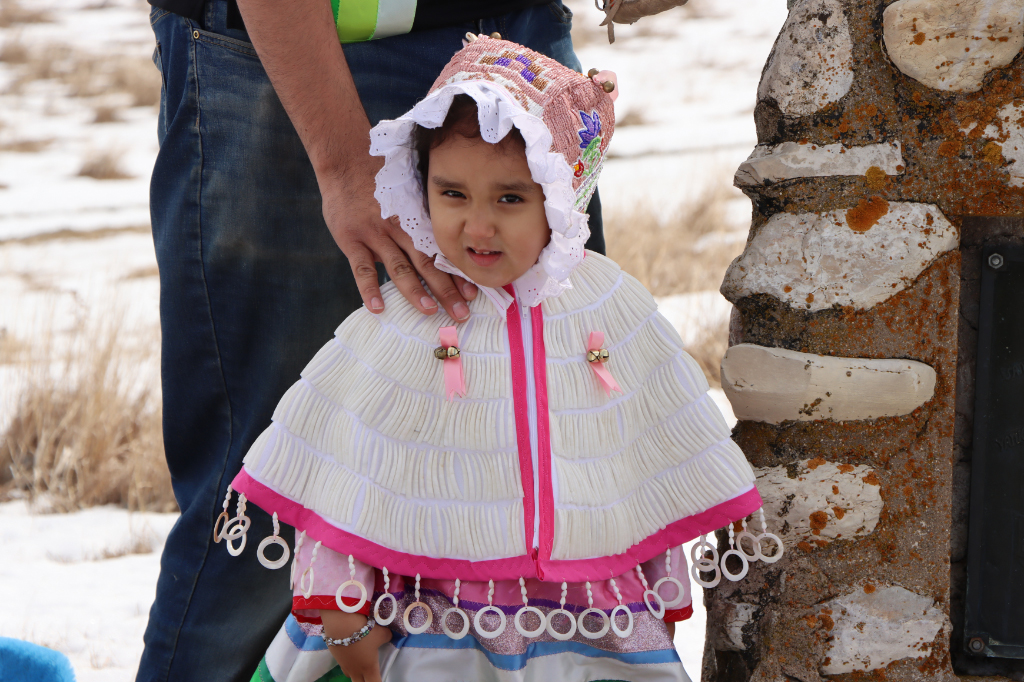
The girl in the first photo is Alberta Two Bears. The other—in a nearly identical cape—is her great-granddaughter, Sofia.
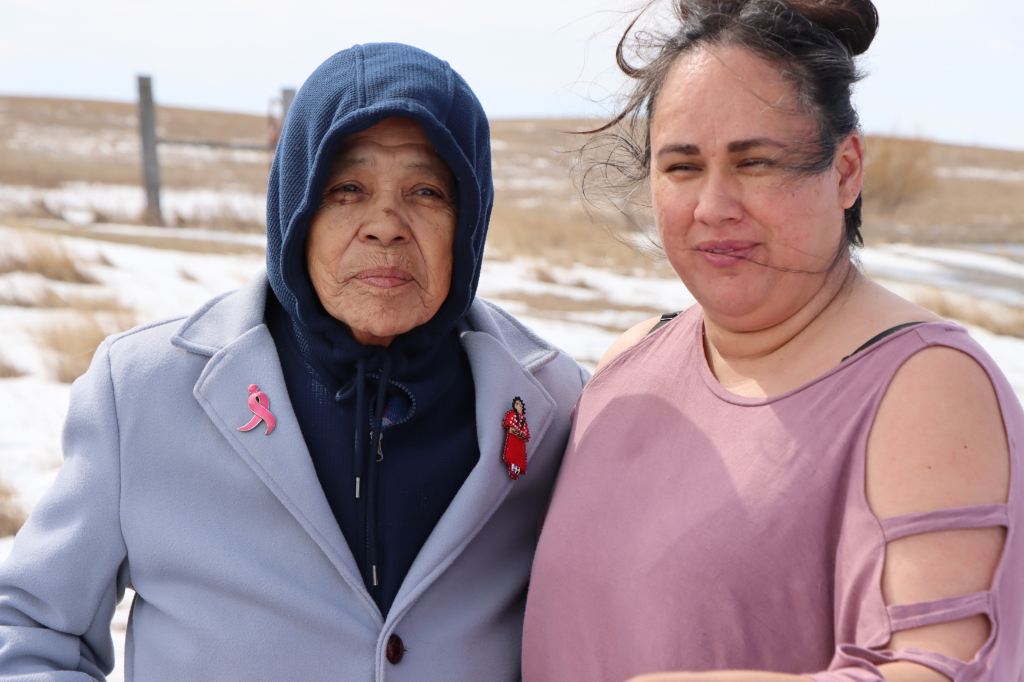
“Yeah, that was a special moment,” says Justine Two Lodge, a Dakota artist and the late Alberta’s cousin. She, too, appears in the 2026 photograph.
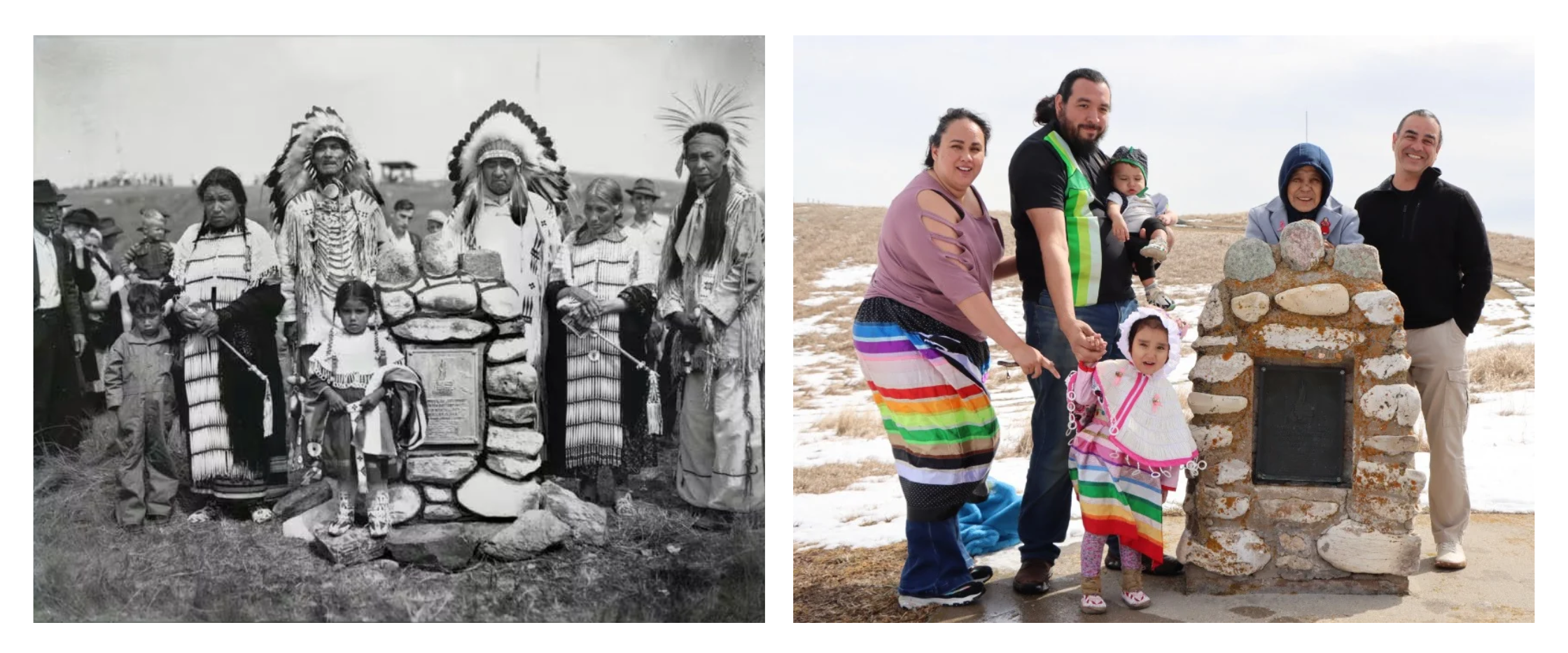
Justine and Alberta are descendants of Chief Two Bears, who survived the Whitestone Hill Massacre of 1863 that saw hundreds from the Očhéthi Šakówiŋ—including children and infants—killed by U.S. soldiers. Eighty years later, Two Bears’s descendants built a memorial for their slain ancestors. They took a photograph, and little Alberta wore her dentalium cape.
Alberta’s great-granddaughter, Sofia, is the youngest daughter of Misty Heiden. A few years before the photograph, Heiden and her elder daughter, Maliyah, approached Two Lodge—“Grandma Justine,” to Heiden’s family—with a proposal: Teach us to make capes.
“For me, it was the family connection,” says Heiden. “These little girls all had capes growing up. I wanted my daughter to have one, too.”
Dentalium shells were once traded between Indigenous communities of the Pacific Northwest and the Great Plains. Hundreds of shells make a single cape, a beautiful traditional garment.
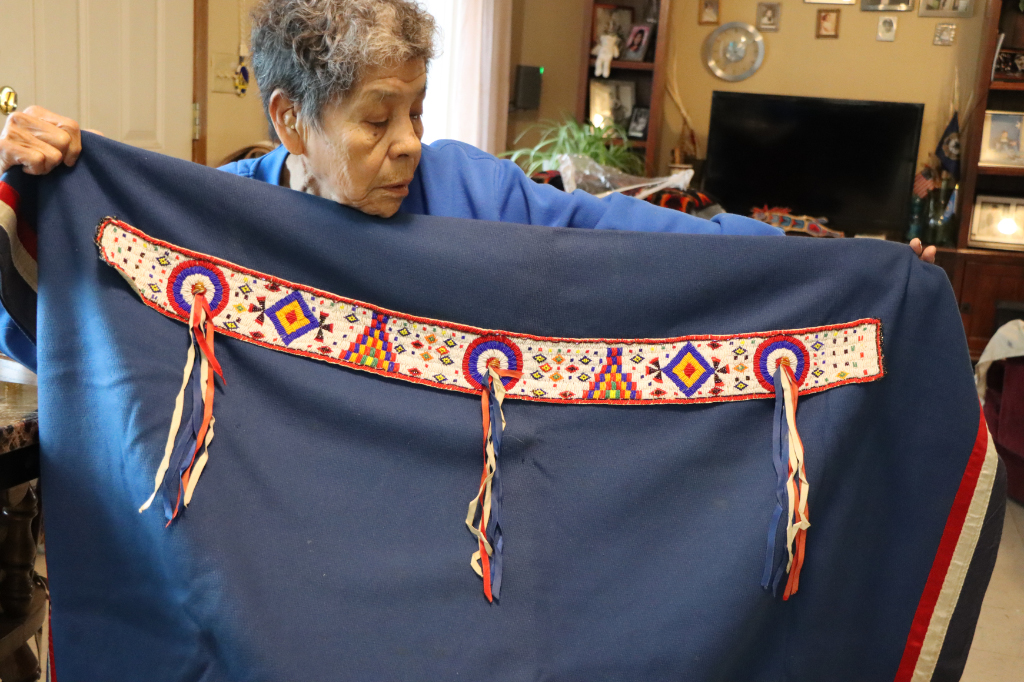
Two Lodge’s grandmother made one for her as a child. But it wasn’t until she was an adult that she began learning traditional arts herself. Now 86, she is a masterful artist with star quilts, moccasins, buckskin dresses, and dentalium capes to her name—making her the ideal teacher for Heiden and Maliyah.
They washed, sanded, and sorted thousands of shells by size. With fishing wire and a long needle, they stitched them, one by one, into tidy rows. To make even a small child’s cape, Heiden estimates it took 400 hours of work.
That work led to a profound connection to the past, documented when Two Lodge and Heiden’s family gathered at Whitestone Hill to recreate that photograph—a moment Heiden calls “chilling, but bittersweet.”
Two Lodge says she didn’t know much about Whitestone Hill growing up. Alberta’s grandson Adam—Misty’s husband and Sofia’s father—didn’t either. As Heiden learned and shared the history, there was grief . . . but also pride.
“He was shocked,” says Heiden. “And he was proud . . . that now he got to stand where his family line was standing, with his own children.”
Teaching traditional arts goes beyond preserving skills, says Troyd Geist, North Dakota’s state folklorist. “What people often don’t know is that for a lot of folks, there are additional really powerful things that happen.”
For some, it’s healing historical pain, and bringing a beloved cultural practice back into a family’s collective memory.
“It felt like our children were walking in their footsteps again,” says Heiden. “If [Alberta] were alive, I wondered how she would feel to see this moment.”