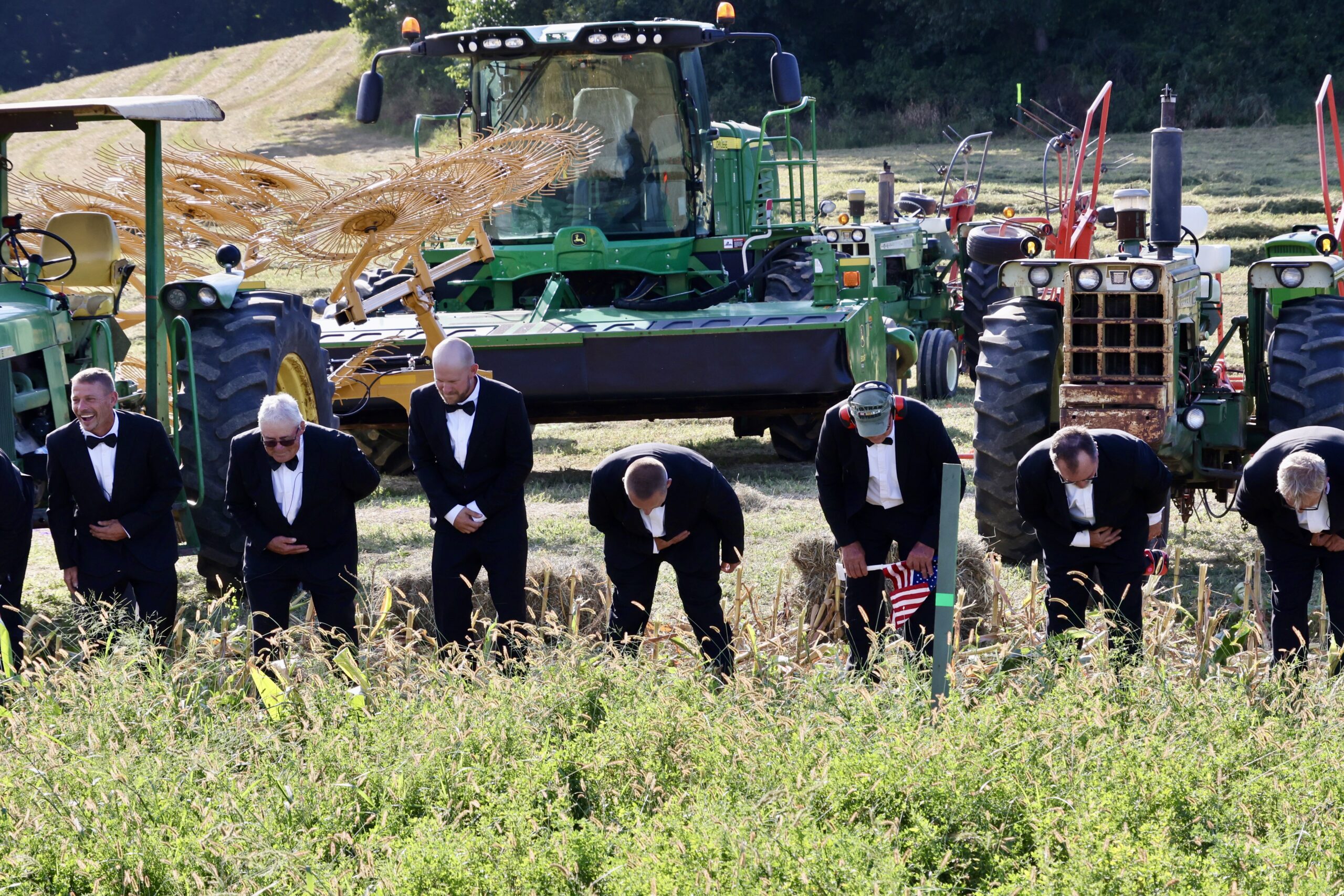
Cue the orchestra. Ticketed eventgoers fan themselves. Anticipation grows, and the stage curtain starts to move.
Except here, the curtain opening is a row of corn mowed down. Let the show begin.
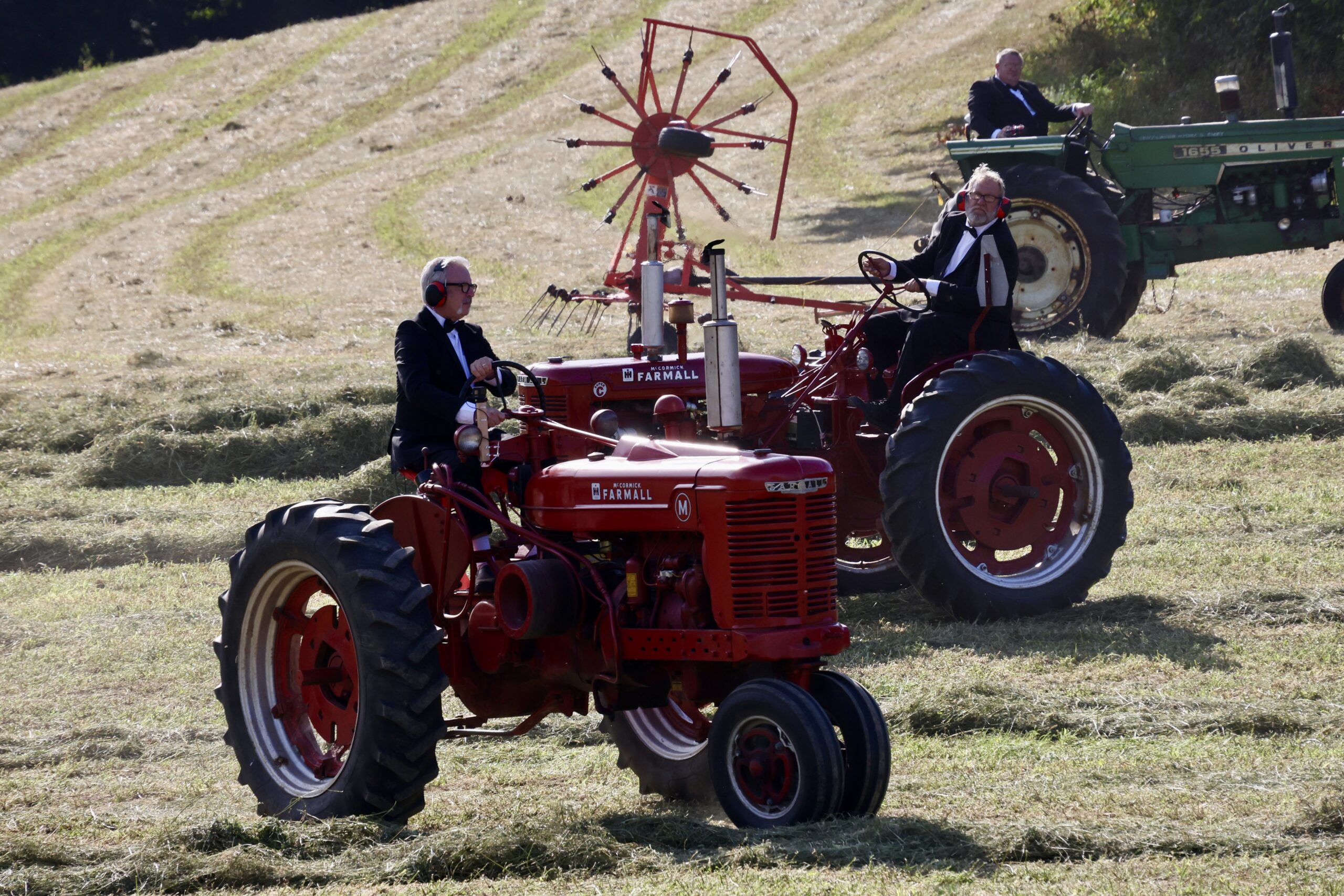
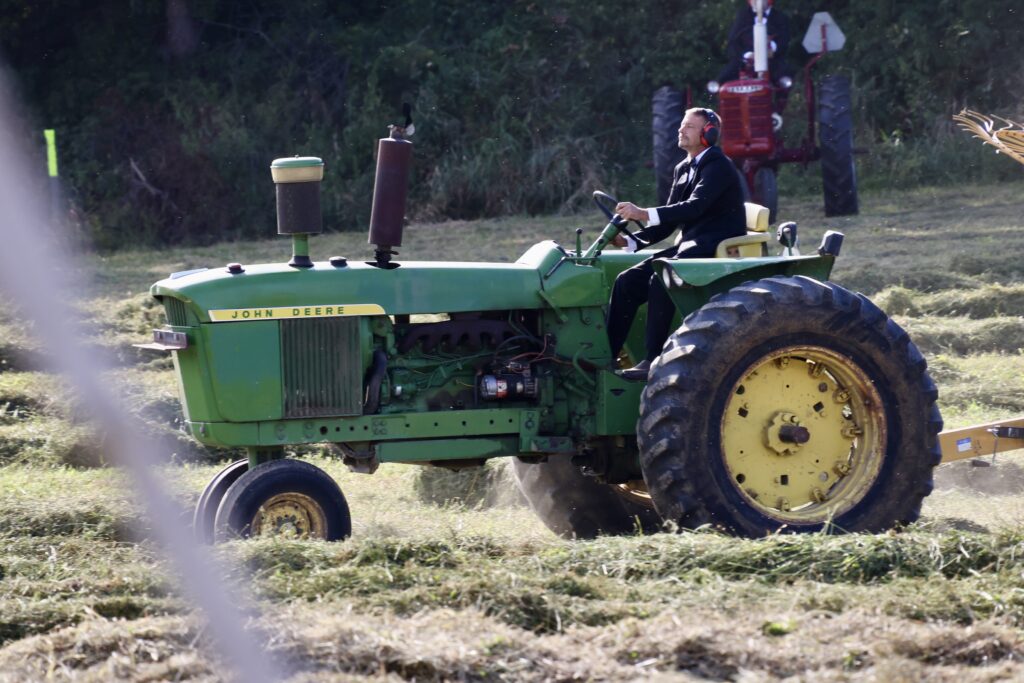
Tractors are revealed, pirouetting to the music (as much as tractors can). They intertwine between each other and rows of alfalfa, engines revving like the late summer heat. Suits cover up farmer’s tans. Sunhats are swapped for bowties.
This is Wisconsin. This is Hay Rake Ballet.
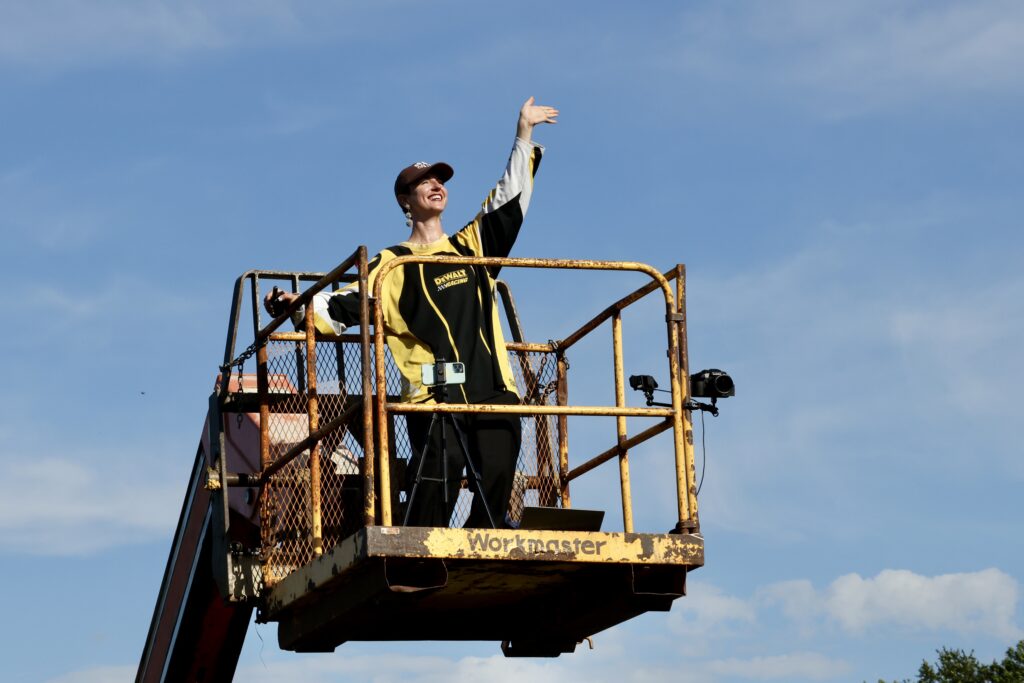
In its third year, choreographer Sarah Gordon Butler is the creator behind the show: “Make Hay While the Sun Shines.” Its six acts are set at Enge Farms in Sauk County, red barns and silos against the open blue sky.
The cast: 18 farmers with their tractors, tedders, rakes, and balers, plus artists from Wild Space Dance Company. The official Wormfarm Institute’s paper program also notes important performers such as the 15-member orchestra, 19 alfalfa acres, and, naturally, Mother Nature.
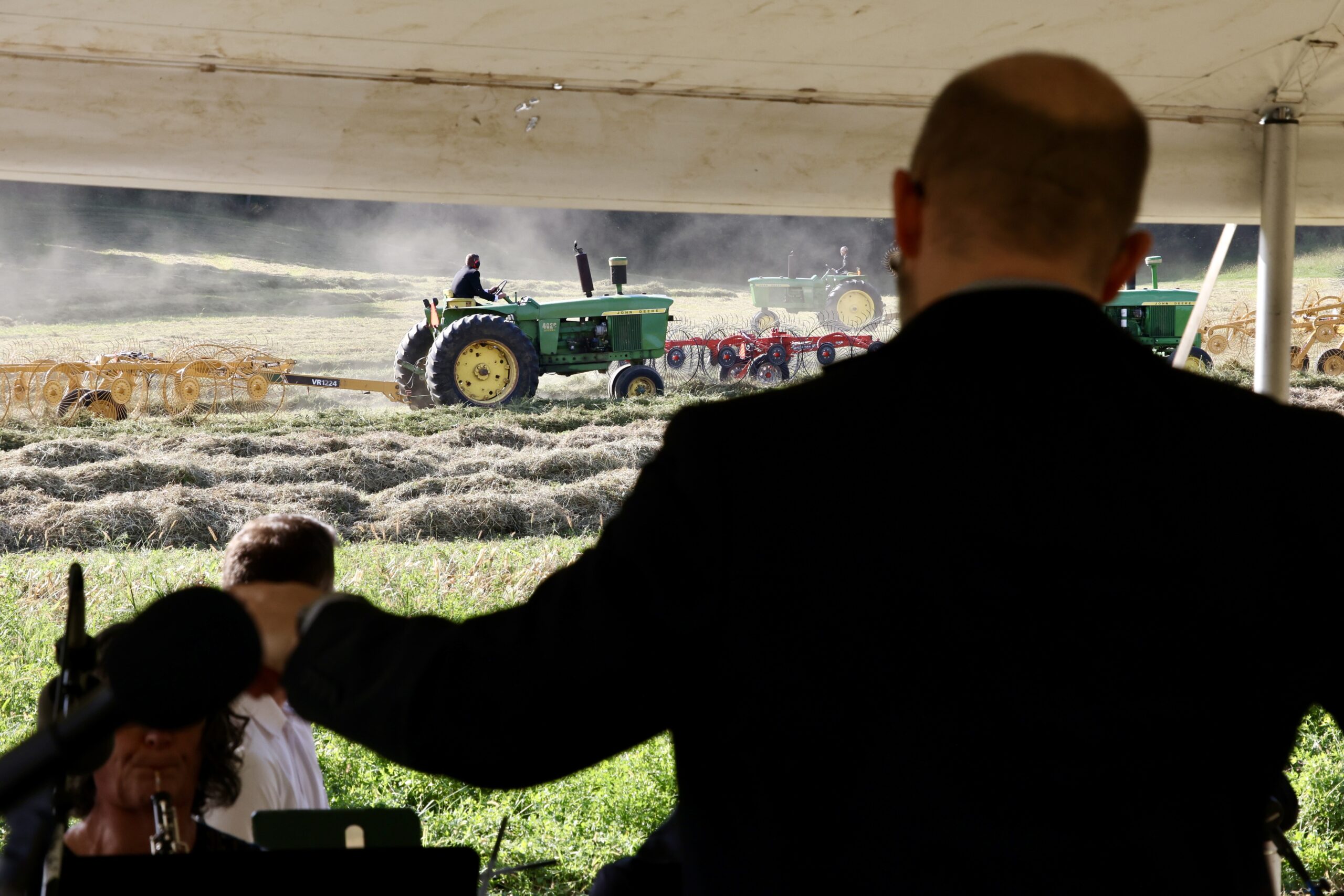
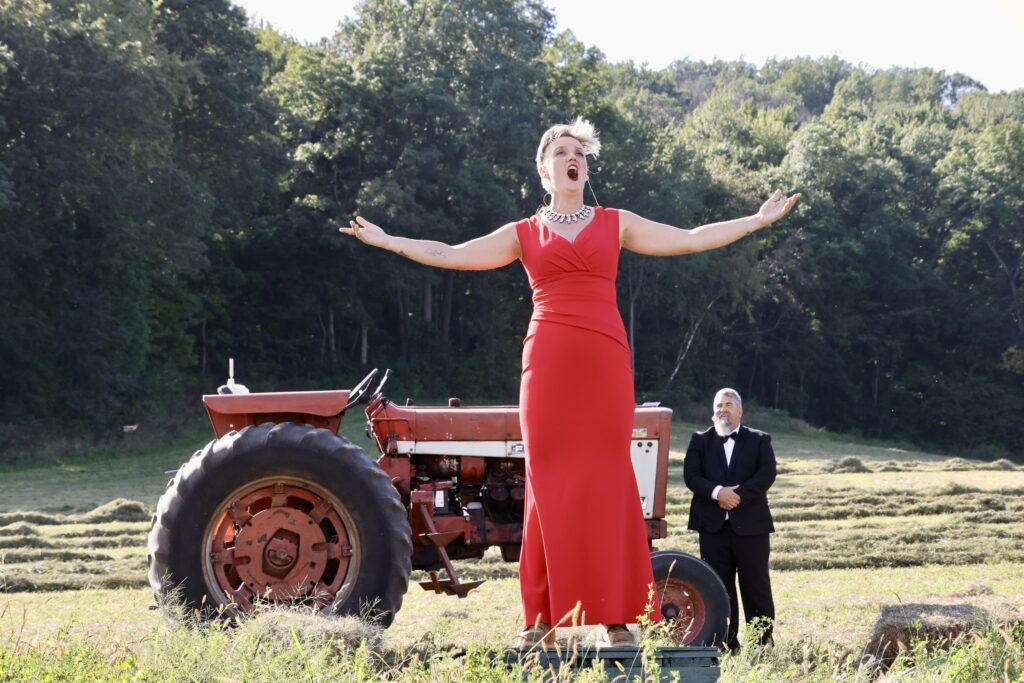
Throughout the show, the mic’d orchestra (playing Tchaikovsky’s “The Sleeping Beauty”) verberates between sounds of wind-shifted corn, applause, and roaring tractors. Renowned soprano Sarah Brailey, in her red formal dress, rides a tractor throughout the performance. She periodically gets off to belt alongside the orchestra, shaded from the hot sun.
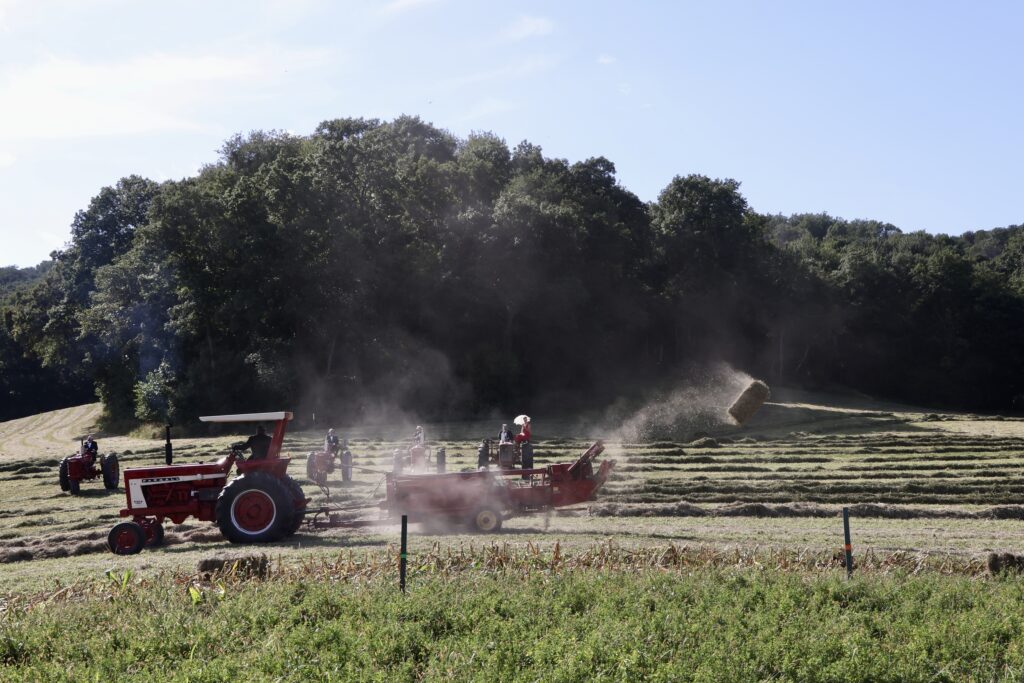
Because this is a working farm, farming does still have to get done—so why not make it part of the show? John Deeres and Farmalls bale the hay, tossing them into the air like a mechanic grand jeté.
SARAH GORDON BUTLER, CHOREOGRAPHER“At every turn (this project has) been an invitation to . . . listen to the small creative sparks and seeds, follow them, and make them real. To learn new things and share my knowledge. To work together with others and with the land. To investigate patience and humility. Humor and grace. I’ve become more human through this.”
Creative Pastures
Darin Rosenbaum lives two miles down the dirt road. He’s been with Hay Rake Ballet since its beginning, when Gordon Butler stopped at his house to gauge interest in the project. This year, he and his son drove several tractors plus a rake and baler, switching them out offstage like costume changes. Rosenbaum’s big moment was mowing the hay to the ground: “It was the big green machine, the one doin’ the donuts.”
Before the show, they’d rehearse two or three times a week.
“We make time. We’re committed, so we make it work. I love it. It’s fun—and who would even think: ‘music to go with (farming),’” Rosenbaum says. “I didn’t know how (Sarah) could do it. But now after doing it, it’s like, ‘Wow, I can’t believe nobody else tried something like this before, because it’s amazing.’”
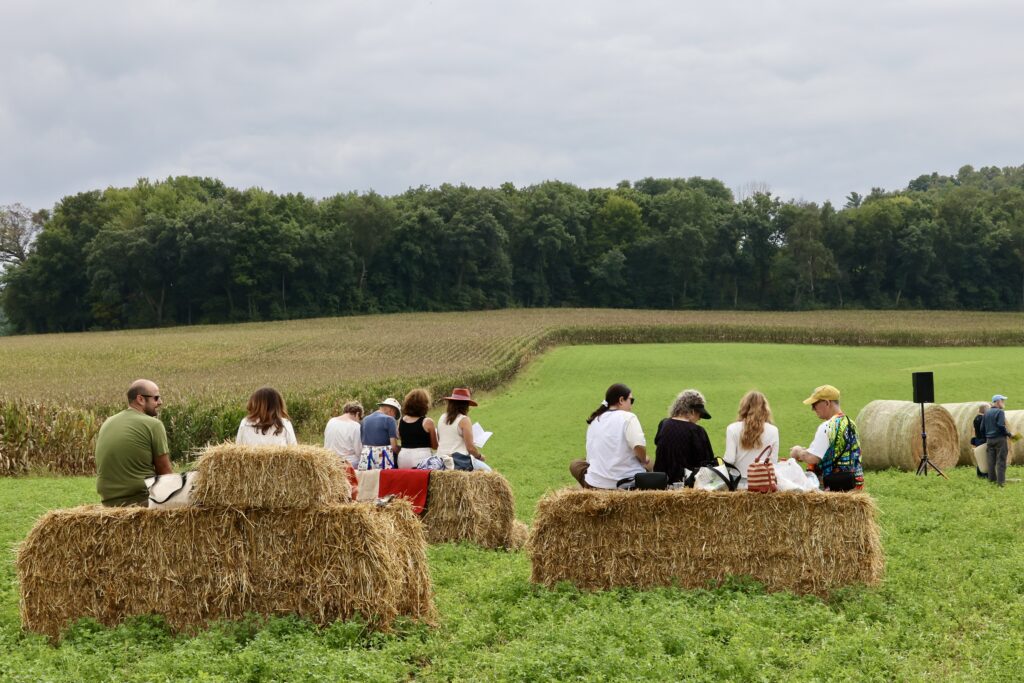
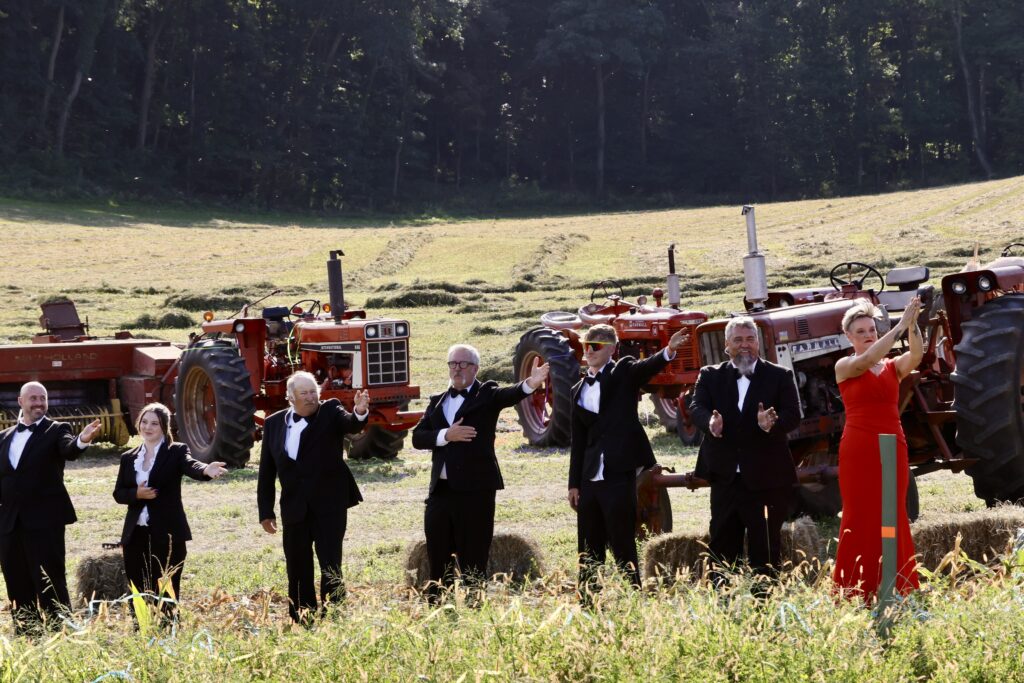
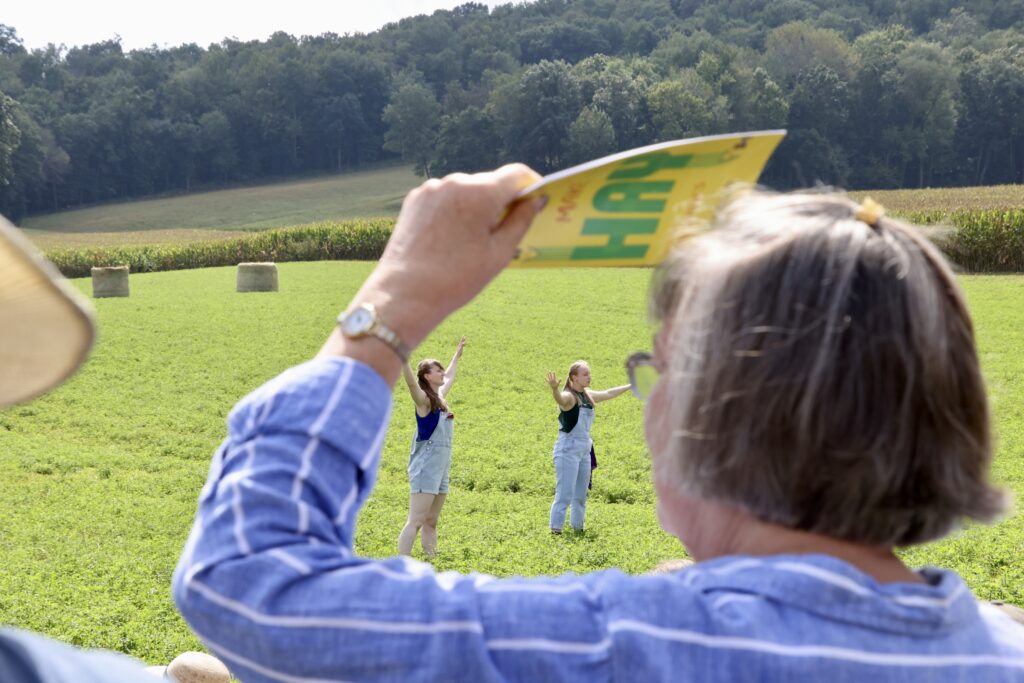
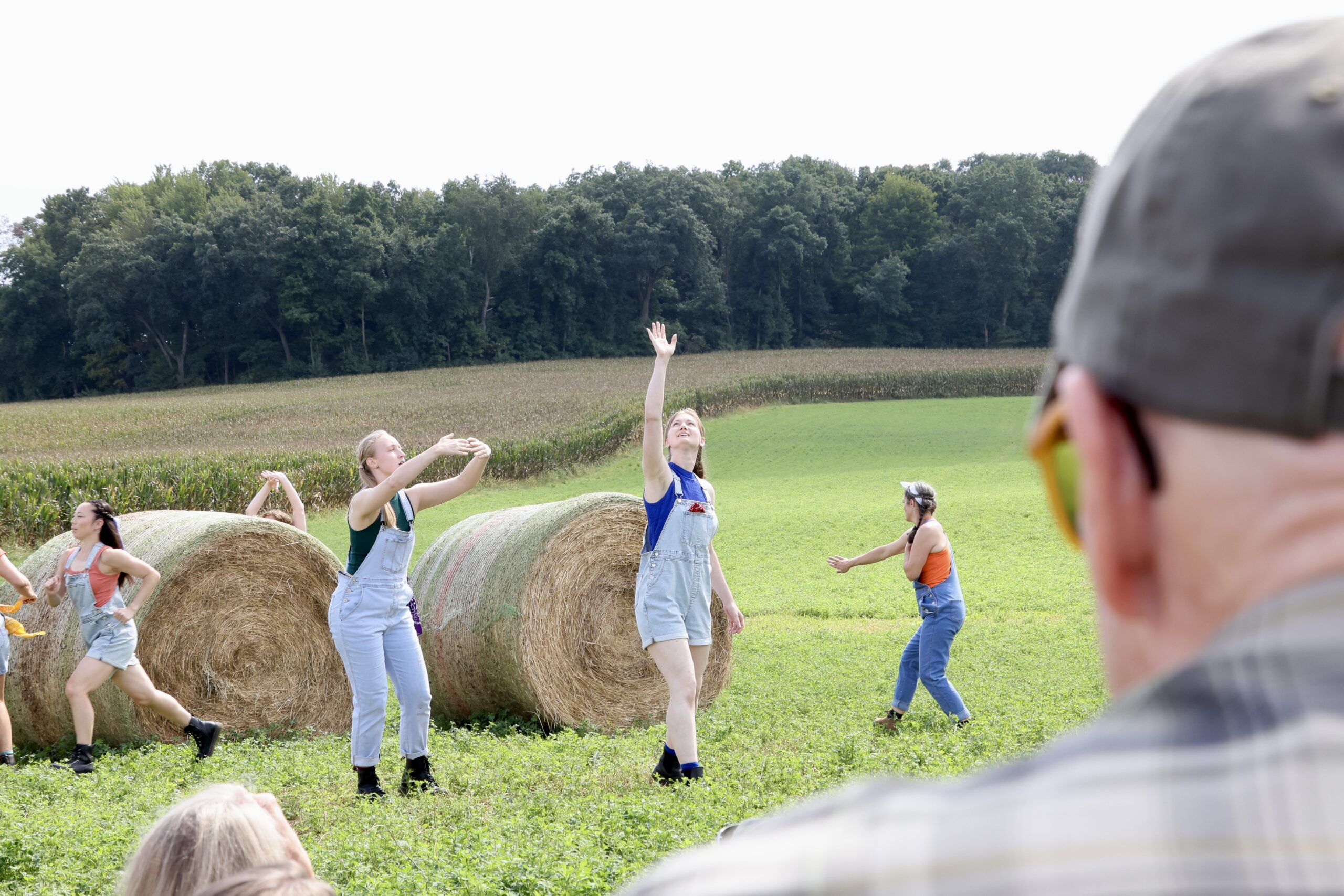
After the show, fans toss roses and step down from the bleachers, some made of bales. In the lobby (an open field), everyone mingles and gets a chance to walk the red carpet (sprinkled with hay).
This is what happens when art makes its way into the ordinary—in an oh-so weird, wonderfully Wisconsin way.
Next year’s live performance is on pause. But filmmaker Shawn Fitzgerald Ahern is cooking up a documentary, still in progress. End scene—for now.